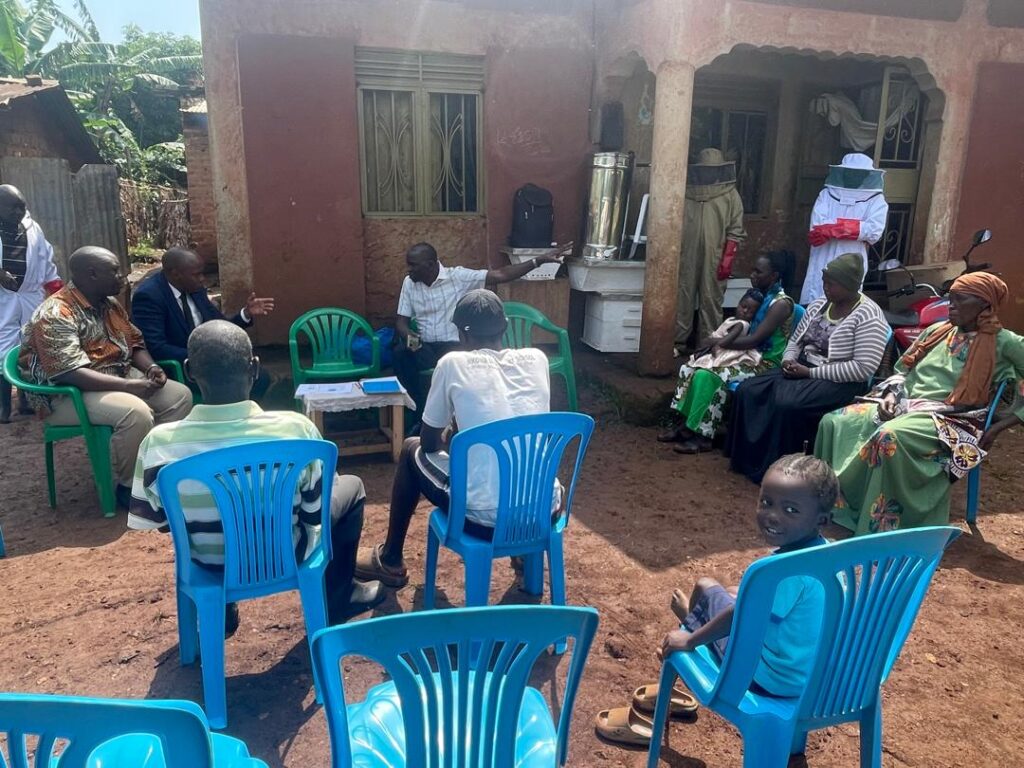
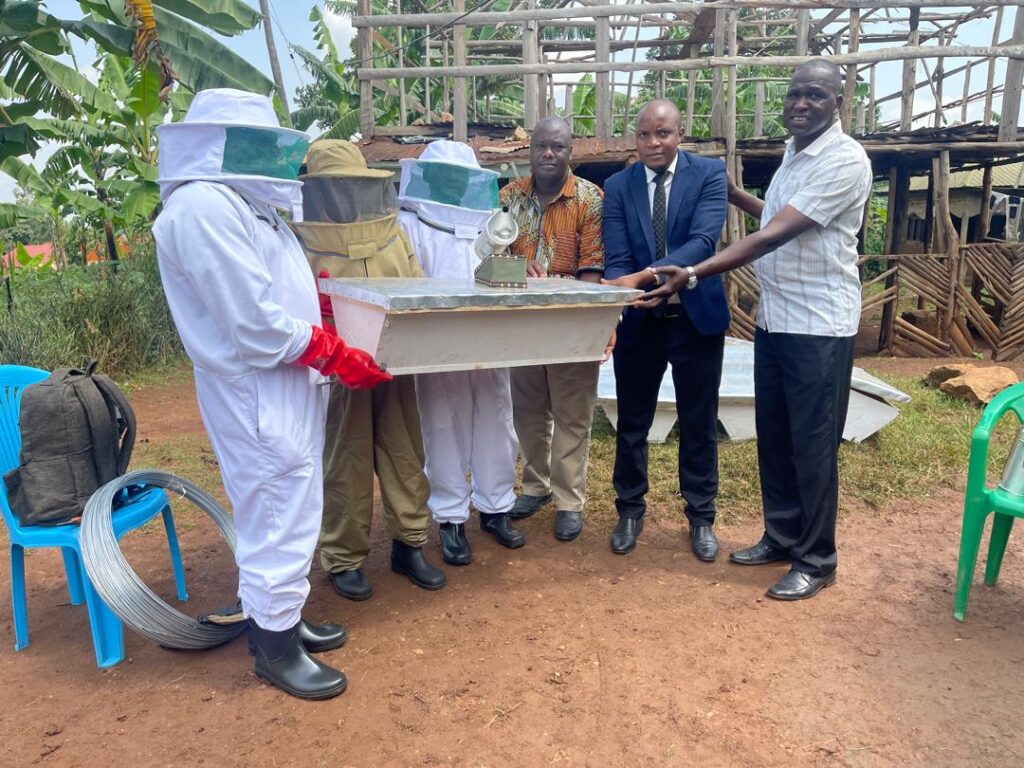
In a drive to support climate-affected communities and improve household incomes, the National Water and Sewerage Corporation (NWSC) Mbale Area has handed over beekeeping equipment to residents of Miale Cell in Muyanda Ward, Industrial City Division as part of the World Bank-funded Integrated Water Management and Development Project (IWMDP), which promotes sustainable use of water and land resources while improving community welfare and protecting local ecosystems.
Led by NWSC-Mbale Area General Manager, Mr. Mukago Gilbert, the handover was an effort to link environmental protection with livelihood improvement. With parts of Mbale severely impacted by recurring land and mudslides, the project is helping communities rebuild through practical, income-generating activities while promoting long-term sustainability around critical water sources.
Mr. Mukago noted that recurring landslides in the region have destroyed property, rendered land unusable, and disrupted lives. He therefore described the project as both a recovery effort and a stepping stone toward sustainable income generation for communities in the Nabijo, Nabuyonga, and Namatala micro-catchments.
The equipment distributed includes bee suits, venom collectors, solar-powered wax extractors, and packaging containers.
Other parties present at the ceremony were local leaders, including the LC1 Chairman; officials from Green and White Enterprises, and Ms. Doreen Cathy Kapsulel, NWSC Principal Public Relations Officer for Eastern Region;
Speaking at the event, Mr. Okello Bosco, Team Leader of Green and White Enterprises one of three local partners implementing the project’s livelihood components thanked NWSC for involving community-based partners. He noted that alongside beekeeping, other interventions under the project include energy-saving technologies and dairy farming support.
The project also focuses on protecting key water sources that feed into Mbale’s supply system. Mr. Mukago stressed the importance of safeguarding the three rivers that serve the town, noting that previous mudslides had not only disrupted service but also compromised water quality and increased treatment costs.
“Water is life and sanitation is health,” he said. “Protecting these water sources is not optional, it is essential to both service continuity and public well-being.”
He urged beneficiaries to take full ownership of the equipment and use it responsibly, reinforcing the importance of sustainability. He also echoed the government’s vision under the Parish Development Model (PDM), which seeks to improve household incomes through local-level accountability and results tracking, locally referred to as Ekibalo.
Local leaders and residents welcomed the intervention, expressing gratitude to NWSC, the Ministry of Water and Environment, and the World Bank. Many noted that the support would help restore livelihoods and strengthen the community’s resilience in the face of environmental shocks.