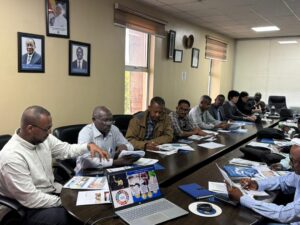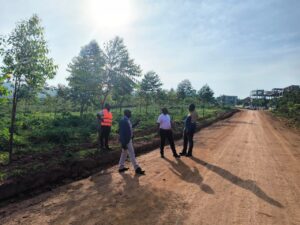

Ensuring millions of Ugandans receive a sustainable reliable supply of clean water starts with the people tasked with the water production process, and at National Water and Sewerage Corporation’s (NWSC) Katosi Drinking Water Treatment Plant (DWTP), that meant refresher training on safe crane operations. The training carried out on September 24th, 2025 focused on safe and efficient overhead crane operations, critical for handling heavy loads during the plant’s day-to-day work.
Senior Human Resources Officer, Mr. Julius Oyet, explained that overhead cranes, whether fixed or mobile, fall under the Occupational Safety and Health Act (2006), and stressed that safe handling of such equipment is not just a legal requirement but also a safeguard against operational disruptions that could affect water supply.
“When our teams operate safely, the entire service chain, right up to the customer’s tap, remains secure,” he said.
The sessions were conducted in phases to ensure full participation from all shifts, with each overseer taking charge of their team. Shift A was led by Mr. Bagenda Thomas, Shift B by Mr. Bright Godfrey, Shift C by Mr. Akandwanaho Daniel, and Shift D by Acting Senior Shift Overseer Mr. Kato Richard. All overseers, who also serve on the Katosi Occupational Health and Safety (OHS) Committee, carry the responsibility of enforcing safe practices across the plant.
The training followed recommendations from the Water Production Directorate’s OHS audit report, which emphasized the importance of equipping staff with specialized knowledge for lifting operations. “Workplace safety is a shared responsibility and must be embedded in everything we do,” said Mr. Oyet.
Beyond protecting staff, the refresher course covered NWSC’s mandate to safeguard plant efficiency and ensure uninterrupted service delivery. With their skills refreshed, Katosi teams are now better equipped to manage operations safely, maintaining the reliability of a facility that supplies millions of Ugandans with clean water every day.