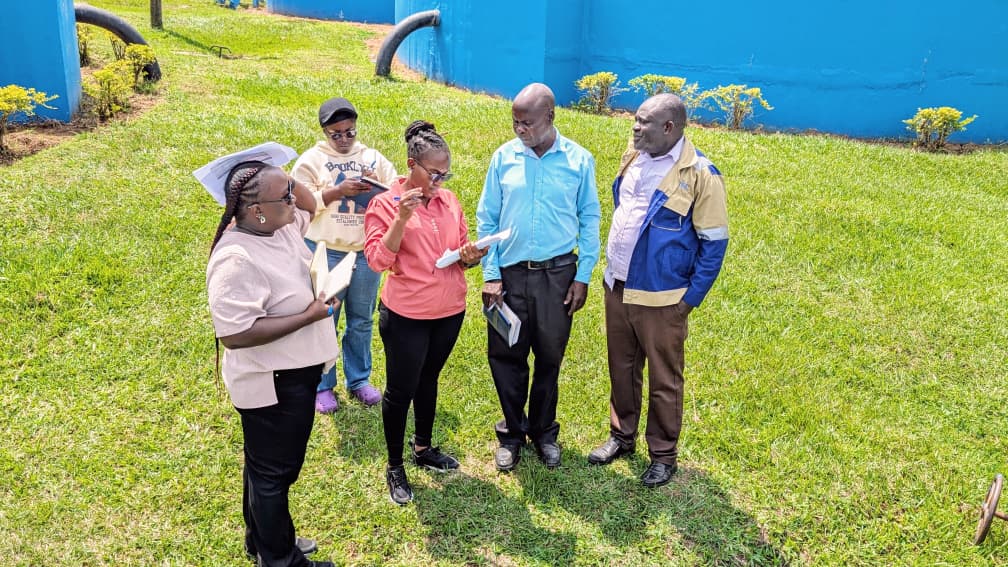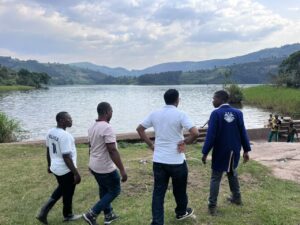

A team of researchers from the National Water and Sewerage Corporation headquarters spent a week, from the 20th to the 26th of July, touring Tororo, Mbale, Soroti and Pallisa to assess how well the region’s water and wastewater treatment facilities are performing.
The team, made up of research managers Ms. Morena Akurut and Ms. Jacqueline Bagonza, research assistant Ms. Elionah Nakato and senior public relations officer Raymond Musinguzi, carried out two related studies side by side, one on faecal sludge treatment plants and waste stabilisation ponds, the other on the electromechanical condition of water treatment plants.
The goal was to understand day to day performance, identify technical problems, and recommend fixes to improve efficiency and sustainability.
In Tororo, the Aturukuku Sewage Treatment Plant serves about eleven kilometres of sewer network but is hampered by an unsuitable sludge dumping site and asbestos cement pipes dating back to 1946 that urgently need replacing. At the nearby Malaba Water Treatment Plant, the old section built the same year is still performing well, but the facility as a whole is now operating beyond its design capacity.
Farming along the riverbanks is washing heavy silt into the system, desilting is still done manually, and the plant suffers frequent pipeline bursts due to the lack of a surge vessel, an ageing pump delivery line, no backup bypass route, and unmetered transmission lines.
In Mbale, the team inspected all four area water treatment plants, the two main wastewater facilities, the new works at Islamic University in Uganda, and the Nabijo intake. Manafwa Water Treatment Plant faces the same siltation and manual-desilting struggles, plus a forty-seven kilometre stretch of old asbestos pipeline prone to bursting, though upgrade works are already underway.
Doko’s stabilisation ponds are well maintained and odour free, with a new inlet and sludge drying beds under construction. Namatala’s ponds, by contrast, are being silted up by illegal stormwater connections from nearby homes, a problem now being tackled with World Bank funding for mechanical scrapers and structural repairs.
Bugiboni Water Works, in Budadiri, faces access and terrain challenges that have cracked some structures, while at Bungokho, clarifier stirrers running below the required speed are causing water to pass through too quickly without settling properly, affecting downstream water quality. The plant does, however, have solid backup power, including a dedicated generator that keeps the Nakaloke Borehole running during outages.
At Awoja, three clarifiers are in use while a fourth is under construction, and the intake continues to battle floating vegetation islands that block screens and disrupt water quality.
The final stop, Kasodo Water Treatment Plant in Pallisa, part of a newly separated operational area, is running its reservoir at full capacity but similarly struggles with floating islands, algae growth and desludging that has never reached full efficiency.

Across all four areas, common problems emerged, ageing pipelines overdue for rehabilitation, heavy siltation, declining raw water quality linked to farming and catchment degradation, floating islands blocking intakes, plants operating beyond capacity, and inconsistent desludging. Encouragingly, upgrade projects are already underway in several locations.
The team recommends replacing old asbestos pipelines, expanding overstretched facilities, protecting catchment areas from silt and pollution, shifting to regular mechanised desludging, controlling floating vegetation at intakes, completing and monitoring ongoing upgrades, and strengthening routine maintenance of electromechanical equipment.
Overall, the assessment shows a system still delivering essential services despite real strain, one that will need sustained investment and maintenance to remain reliable.