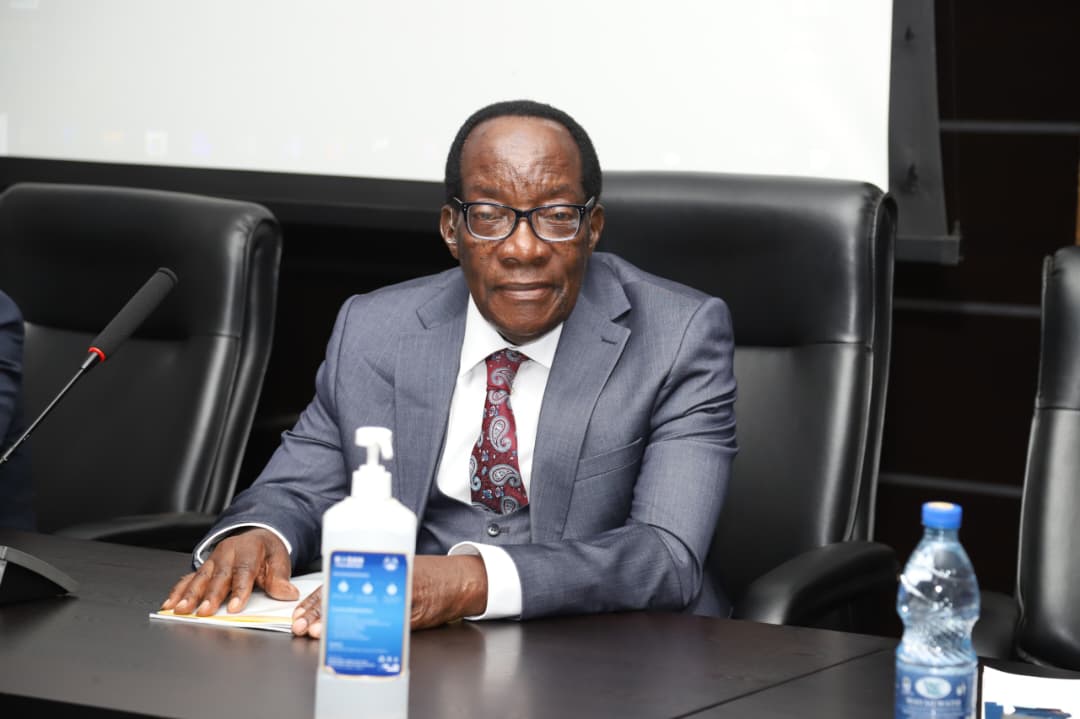
Six years after assuming stewardship of the National Water and Sewerage Corporation (NWSC), the outgoing Board of Directors has handed over office with a record of expanded service coverage, major infrastructure investments and strengthened institutional performance, setting the stage for the Corporation’s next phase of growth.
The achievements were highlighted during the official handover ceremony, where outgoing Board Chairman Eng. Dr. Badru M. Kiggundu presented the Board Performance Report covering the period 2020–2026. The report reflected on the Board’s role in guiding the Corporation through a period of significant expansion while strengthening governance, financial sustainability and operational performance.
Dr. Kiggundu noted that throughout its tenure, the Board maintained a strong governance framework supported by specialized committees working closely with Management. The Board also recorded full attendance at its meetings over the six-year period, underscoring its commitment to effective oversight and corporate governance.
Under the Board’s leadership, NWSC significantly expanded access to water services across the country. The number of towns served increased from 258 to 293, while villages benefiting from NWSC services grew from 7,192 to 11,568. Customer water connections rose by 47 percent, surpassing 1.06 million, while the number of public standpipes increased by 55 percent to 33,505, extending access to safe water for thousands of additional households and communities.
The Corporation also registered notable growth in water production and financial performance. Annual water production increased from 140 million cubic metres to 186.1 million cubic metres, while water sales rose from 87 million to 112.4 million cubic metres. During the same period, annual billing grew by 54 percent, rising from UGX 424 billion to UGX 653.9 billion, reflecting improved operational efficiency, expanded service coverage and stronger revenue collection.
The Board further oversaw the implementation of several strategic infrastructure projects that have strengthened water and sewerage services across the country.
These include the Katosi Drinking Water Treatment Plant and Transmission Main, Nakivubo Wastewater Treatment Plant, Karuma Water Treatment Plant, and the Kiruddu Compact Sewage Treatment Plant. Additional water supply projects were completed in Hoima, Lyantonde, Kagera, Fort Portal, Kyankwanzi, Kalungu, Bushenyi, Soroti and Adjumani, among other areas, contributing to improved access to safe and reliable water services.
Beyond infrastructure development, Dr. Kiggundu highlighted progress in institutional transformation through the adoption of digital systems, strengthened risk management practices and successful mobilisation of both local and international financing. These initiatives, he noted, have enhanced the Corporation’s operational efficiency while positioning it to respond more effectively to future service demands.
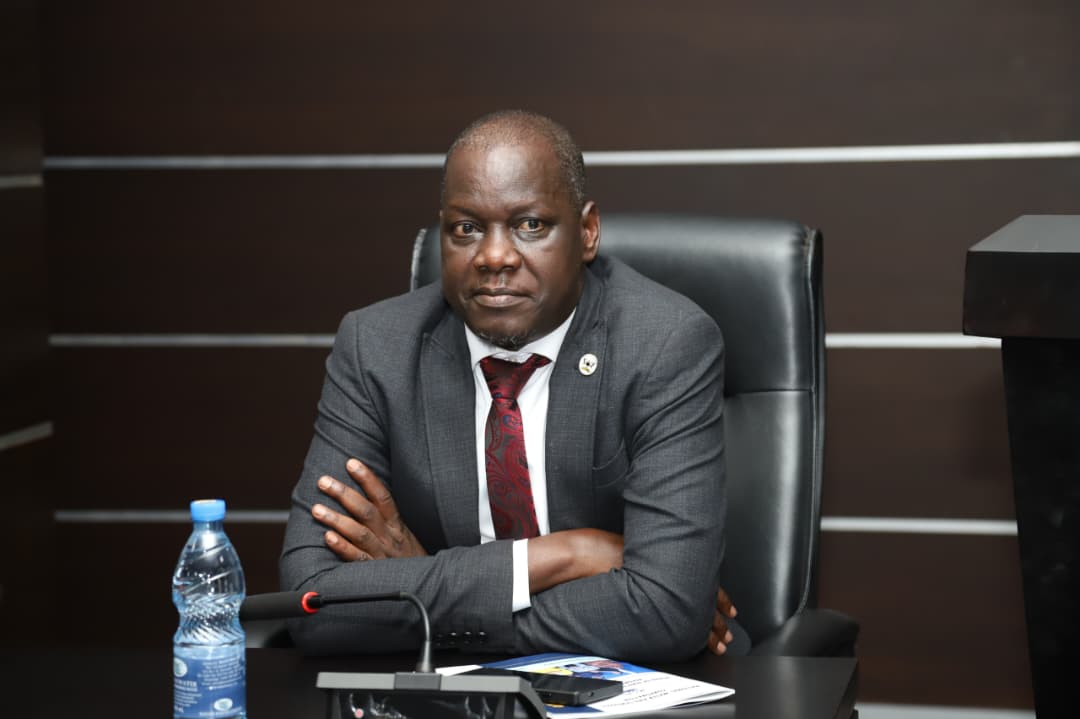
Despite the achievements, Dr. Kiggundu acknowledged that significant challenges remain. He cited inadequate government funding, delayed settlement of government water bills, high levels of non-revenue water, environmental degradation, climate change, increasing land acquisition costs and disruptions in global supply chains as some of the issues that will continue to require strategic attention.
As he concluded his presentation, the outgoing Chairman called for sustained investment in water infrastructure, stronger protection of water sources, accelerated efforts to reduce non-revenue water and continued financial support to enable the Corporation to meet the country’s growing demand for water and sewerage services.
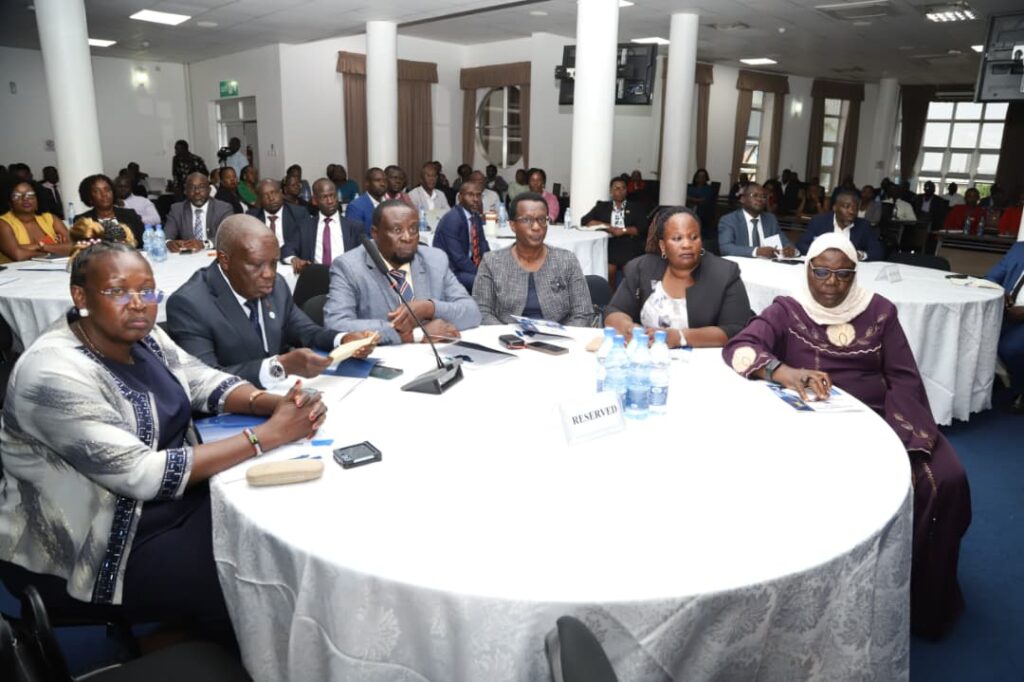
With a new Board now taking office, the handover marks the close of one chapter and the beginning of another. Building on the progress achieved over the past six years, the incoming leadership assumes responsibility for advancing NWSC’s mission of delivering safe, reliable and sustainable water and sewerage services to communities across Uganda.
Seriously, this whole ‘process’ section is basic. You gotta see the actual gameplay depth to get it. Check out 1778 app ক্যাসিনো for real insights. 🧐
Seriously, the bonus structure they mention is cool, but remember to check the fine print! Always approach these sites with caution. For a solid rundown, check out cd333 first. Stay smart out there!
This analysis of JLSS’s math seems deep! The RTP transparency is key, not just marketing fluff. Checking out jlss download apk to see those algorithms in action. 🤔
You know that moment when you finally hit a decent streak on your favorite video slots and the balance just keeps climbing well that is exactly how it feels here the game library is massive and the RTP on most titles is refreshingly fair so I signed up right away and have not looked back since.bigwin777slotonline
Best place to unwind after work! The game variety is top notch and the community is friendly. Definitely give vipphfun a try tonight.
It’s easy to get caught up in the excitement of online gaming, but responsible bankroll management is key. Platforms like hm 88 offer variety, but remember to play within your limits. Check out hm 88 download for options, and prioritize smart play!