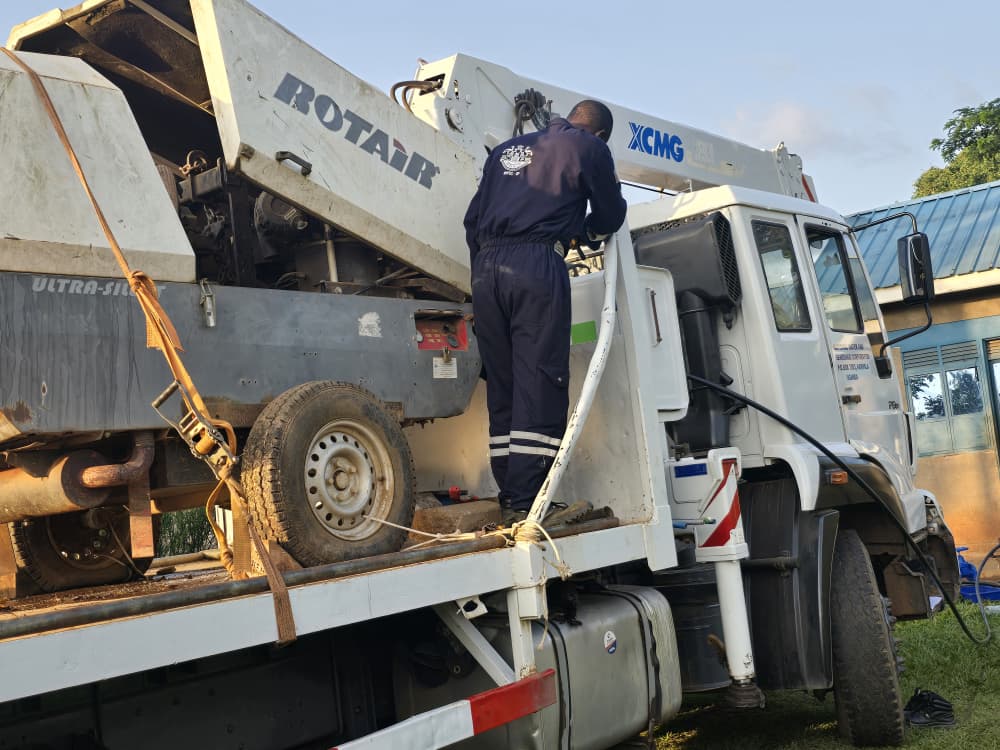
Efforts to restore reliable water supply in Kiryandongo and Bweyale have gathered momentum following the rollout of a series of strategic interventions aimed at increasing water production and strengthening service reliability across the two areas.
The ongoing works combine immediate measures to stabilize water supply with long-term infrastructure investments designed to meet growing customer demand. They include the development of new boreholes, rehabilitation of existing groundwater sources, and installation of key electrical infrastructure that will bring additional production facilities online.
In Bweyale, a technical team led by Senior Manager Operations Central (SMOPs), Eng. Moses Bigabwa, conducted a borehole siting exercise to identify suitable locations for the development of additional groundwater sources following the decline in yields from existing boreholes, which has affected water production in the area.
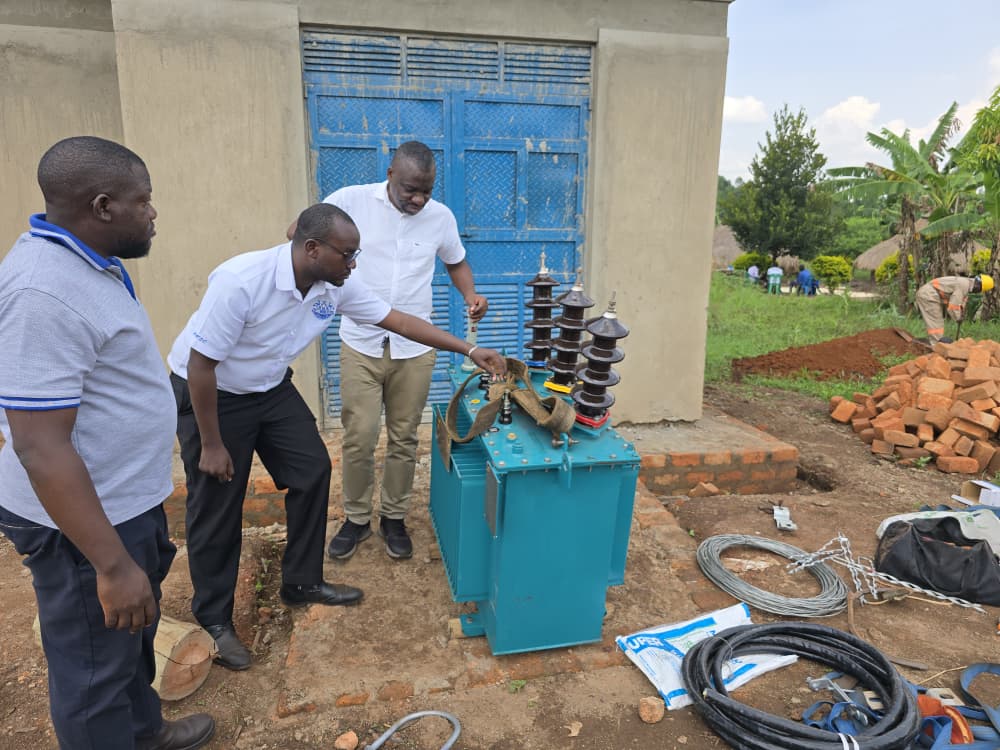
The team also inspected the ongoing works at the Kisoona Borehole, where construction has entered its final stages. Installation of the power transformer is currently underway and will be followed by the installation of an electricity meter before pump testing is carried out. Once commissioned, the borehole is expected to produce an average of 20 cubic metres of water per hour (20m³/hr), providing a significant boost to the Bweyale water supply system.
To further strengthen production capacity, another borehole was sited at Adagwo Kichwabuging. Preliminary assessments indicate that the new groundwater source is expected to yield between 20 and 30 cubic metres of water per hour (20–30m³/hr).
Together, the Kisoona and Adagwo Kichwabuging boreholes are expected to close the current water demand gap and provide a sustainable solution to the area’s water supply challenges.
Meanwhile, in Kiryandongo, efforts have focused on restoring production from existing infrastructure while preparations continue for additional water sources. An air compressor cleaning exercise was carried out on the Kiryandongo II Borehole to improve its performance and temporarily increase water production, helping stabilize supply to customers as more permanent interventions are implemented.
At the same time, the technical team identified three new borehole sites at Kikube, Kiryandongo II Cell, and the existing Kiryandongo II Station. Development of these boreholes is expected to substantially increase water production capacity and provide a lasting solution to the area’s water supply challenges.
The ongoing interventions reflect a carefully phased approach to improving water supply in the two areas addressing immediate operational challenges while investing in infrastructure that will support reliable service delivery well into the future. Once the new boreholes are fully developed and commissioned, customers in Kiryandongo and Bweyale are expected to benefit from improved water availability, enhanced system resilience, and a more dependable water supply.
Interesting read! Basic strategy’s subtle shifts can really impact your long-term results. Seeing platforms like lucky starz maya com cater to local payment options like GCash is smart for Filipino players. Good stuff!
Honestly, reading about the structured experience is key; too much chaos online! The focus on user journey, like with shbest app, seems smart for beginners navigating so many game types. Hope it’s as smooth in practice.
Interesting breakdown of player psychology here. It’s more than just game access; community structure matters. I found 798 club’s focus on user experience insightful, not just listing keywords. Very objective analysis!
Downloading the app took less than a minute and now I keep it open on my home screen at all times. The notifications keep me in the loop for new tournaments and free spins without being annoying at all. I have made some great friends in the community chat and we all agree this is the best spot around. myan99app