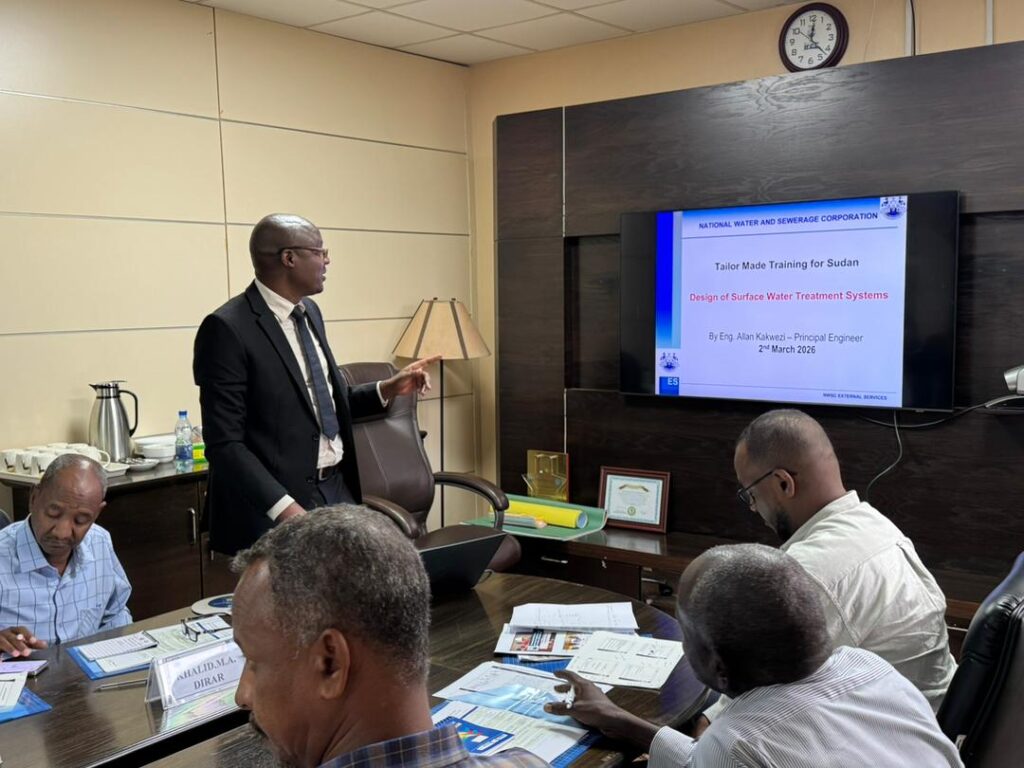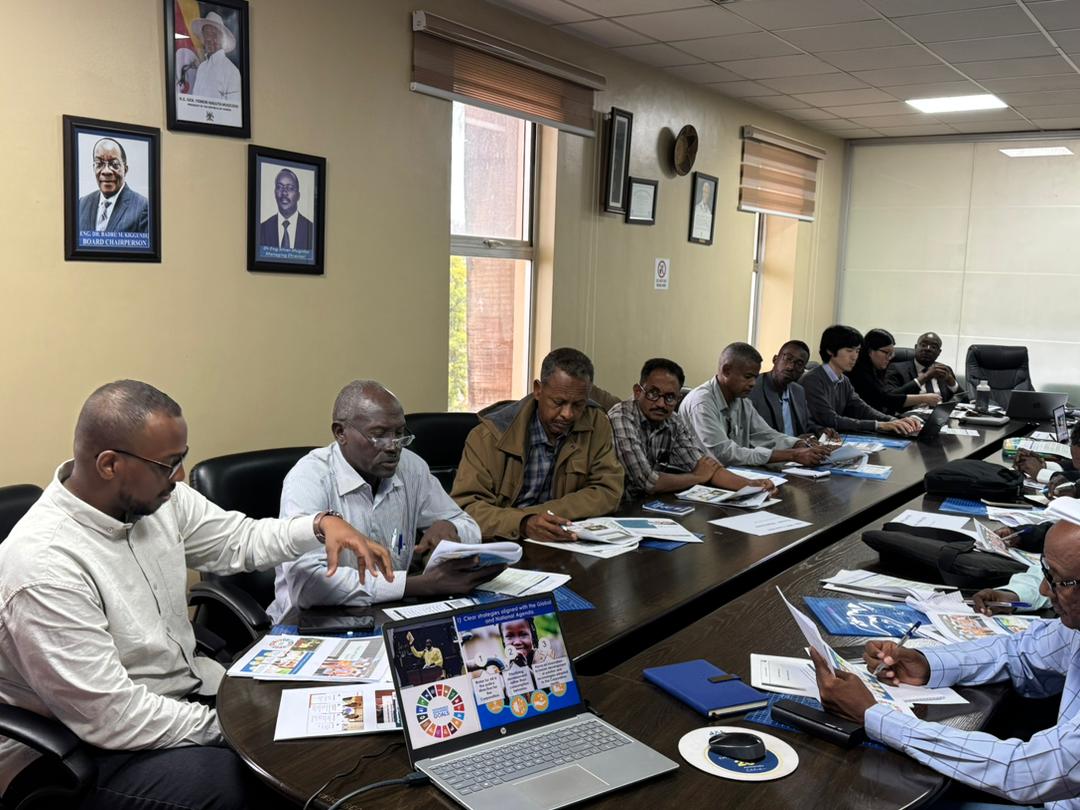
The National Water and Sewerage Corporation (NWSC) has partnered with the Japan International Cooperation Agency (JICA) and Japan Techno Co., Ltd. to develop a training programme aimed at strengthening the capacity of urban water utilities in Sudan.
The collaboration was discussed during a technical planning meeting held on February 26, 2026, bringing together NWSC’s External Services team, technical experts and representatives from the Japanese institutions to assess Sudan’s operational challenges and design targeted capacity-building interventions.
Officials said the initiative will draw on NWSC’s experience in utility reform, performance management and regional training to support Sudan’s efforts to improve water supply operations.
Opening the discussions, Eng. Zainab Mpakiraba, Manager of External Services at NWSC, said strengthening utilities requires more than infrastructure investment.
She noted that sustainable service delivery depends on leadership, institutional reform and strong management systems.
“Strengthening utilities goes beyond infrastructure. It requires leadership transformation, accountability and a shift toward efficient and customer-focused service delivery,” she said.
Eng. Allan Kaford, Principal Engineer External Services, emphasized the importance of benchmarking and performance monitoring, saying utilities must understand and analyze operational data to improve efficiency.
He added that training programmes must combine technical theory with practical field experience to ensure effective skills transfer and long-term improvement in operations.
On the financial side, Ms. Alice Busingye, Manager Finance External Services, highlighted the need for stronger financial systems within utilities, including cost recovery mechanisms that enable sustainable operations.
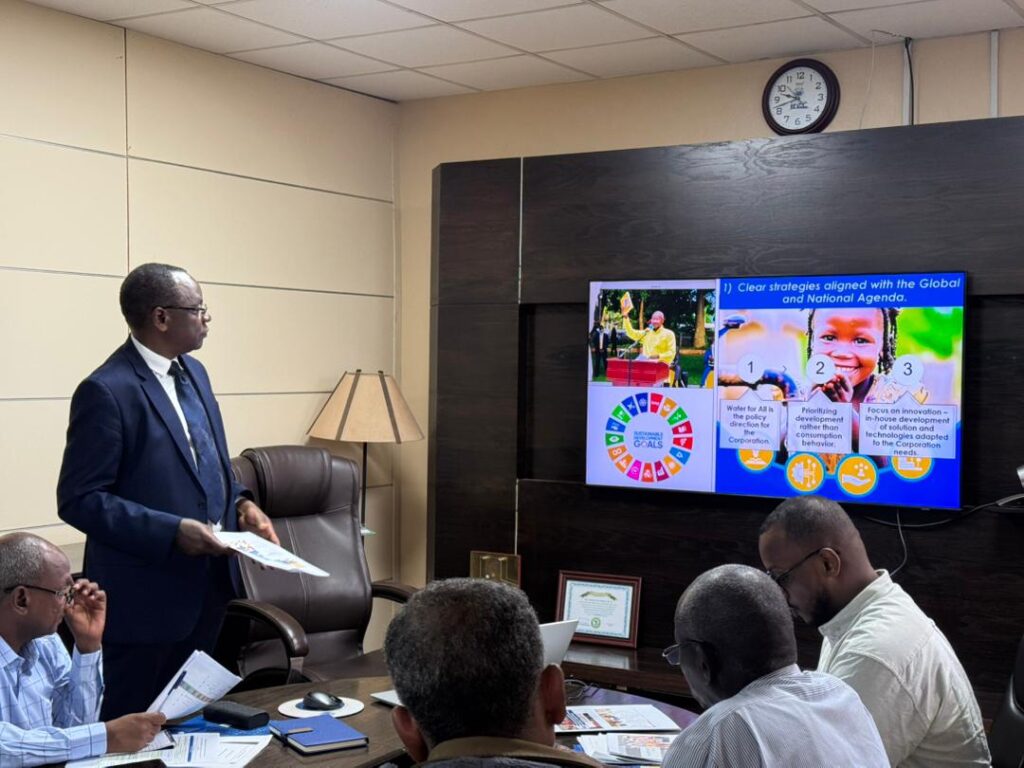
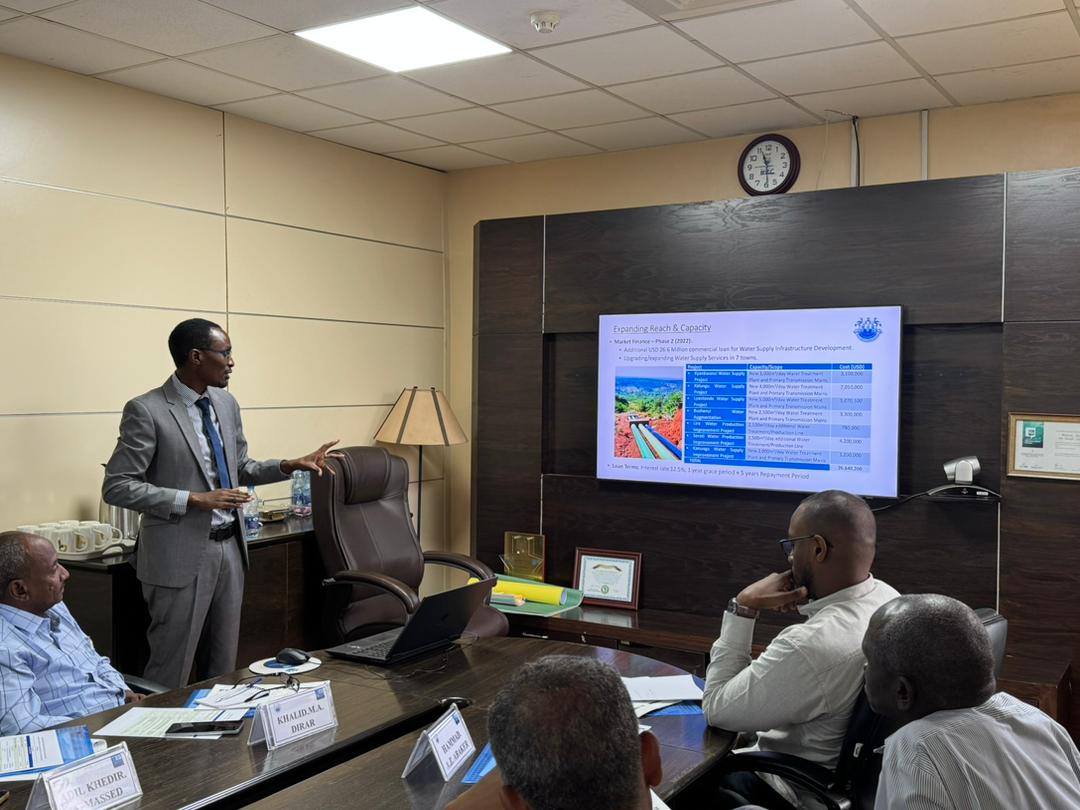
A presentation by Mr. Toshiki Horei, consultant with Japan Techno Co., Ltd., outlined several challenges affecting Sudan’s urban water utilities, including limited centralized administrative coordination, declining financial performance and weak operational data systems.
Technical issues such as high turbidity levels in water sources, aging infrastructure, widespread leakages and limited use of flow meters were also identified as major constraints affecting water production monitoring and non-revenue water management.
Flat tariff structures and weak billing mechanisms have further undermined financial sustainability and reduced incentives for water conservation, the meeting heard.
NWSC was identified as a key technical partner in the initiative due to its strong track record in utility performance improvement and capacity development across Africa.
The proposed programme will focus on training in change management, non-revenue water reduction, financial management, customer care and infrastructure management.
Practical vocational training for technicians, plumbers and water quality personnel will also be included to ensure hands-on skills transfer.
Eng. Allan Kakwezi, Principal Engineer Planning and Capacity Development, attended the meeting and is expected to serve as one of the lecturers in the upcoming training programme.
Participants also discussed practical training areas such as HDPE pipe repair, emergency leak response, monitoring systems and utility performance indicators.
Mr. Mayusumi Masanobu of JICA reaffirmed the agency’s commitment to supporting Sudan’s water sector through technical cooperation and institutional strengthening.
Through its External Services programmes, NWSC has increasingly positioned itself as a regional training hub, sharing Uganda’s experience in improving utility performance and strengthening water service delivery across the continent.