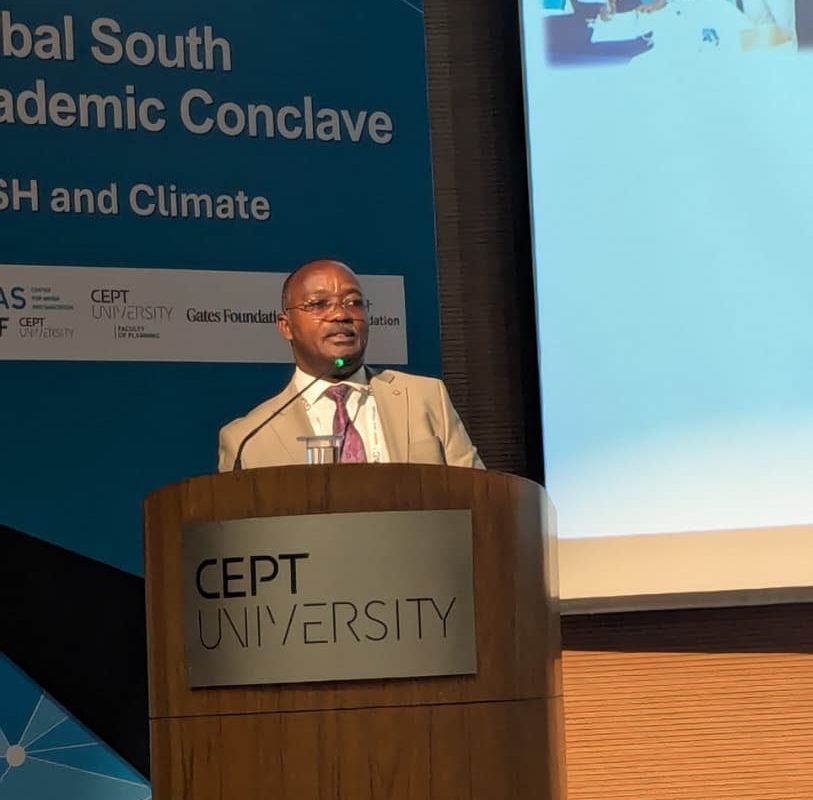
Uganda’s National Water and Sewerage Corporation Managing Director Dr Eng Silver Mugisha, speaking in Ahmedabad, India, has called for a fundamental rethink of how public utilities in the Global South are designed, managed and sustained, arguing that survival in an era of climate stress and rapid urbanisation demands a shift from engineering driven institutions to customer centred service providers.
Speaking at the Global South Academic Conclave 2026 hosted by CEPT University on Friday 06 February 2026, Dr Mugisha shared NWSC’s transformation journey, positioning Uganda’s national water utility as a case study in public enterprise reform.
He told delegates that utilities in the Global South operate at a complex intersection of climate resilience, public finance, governance and social equity, making traditional infrastructure focused approaches insufficient.
NWSC’s own evolution, he explained, reflects a radical change in management philosophy. From a struggling institution prior to 1998 characterised by low service coverage and weak financial sustainability, the Corporation embarked on wide ranging institutional reforms before entering its current phase of aggressive jurisdictional expansion.
Today, NWSC operates in more than 287 towns, up from just 23 in 2013. It manages over one million water connections serving more than 22 million people, while annual turnover has grown from UGX 170 billion to UGX 622 billion over the past decade.
“Engineering builds systems,” Dr Mugisha told the conclave. “Service delivery builds trust.”
He attributed NWSC’s performance to a business model that prioritises operational efficiency and service equity rather than asset expansion alone. Central to this approach is the Corporation’s incentive based New Performance Management framework.
“These contracts establish clear performance indicators at corporate, area and individual levels to ensure accountability,” he said, adding that performance measurement has reshaped organisational behaviour and entrenched a culture of financial self reliance, treating the utility as a business while retaining its public mandate.
Digital transformation has also been a critical enabler. By developing home grown digital systems instead of relying entirely on expensive off the shelf solutions, NWSC has achieved real time operational monitoring and data driven decision making. These systems have strengthened billing efficiency and reduced non revenue water, improving both service delivery and financial health.
Despite the gains, Dr Mugisha acknowledged that major challenges remain. Climate variability continues to intensify water insecurity, while rapid urban growth and the expansion of informal settlements complicate efforts to achieve universal access.
“Success does not mean the absence of problems,” he said. “It means better tools to confront them.”
One persistent imbalance is the financing gap between water supply and sewerage services. While water coverage has expanded rapidly, sanitation infrastructure lags behind due to high capital costs and limited cost recovery. He stressed the delicate balance utilities must strike between affordability for consumers and financial sustainability.
To strengthen evidence-based decision making, Dr Mugisha revealed that NWSC has established a Strategic Research Committee. He cited a recent meter accuracy study involving 1,200 meters as an example of how research and development now function as the engine room of efficient service delivery.
He urged a stronger academia utility partnership, challenging researchers to move beyond theoretical work and focus on solving real operational problems faced by utilities in the Global South.
“We need to invest in ecosystems that bridge the classroom and the field,” he said. “Engineering innovation must drive the water and sanitation transformation agenda.”
Dr Mugisha also highlighted NWSC’s Corporate Plan 2024 to 2027, which sets ambitious targets including expansion to 350 towns and service provision to 26 million people by 2030. Achieving this vision will require a strong focus on climate stewardship and service equity, particularly for residents of informal settlements who remain most vulnerable to water scarcity.
He concluded that the future of water and sanitation in the Global South will be determined not only by technology, but by leadership and the courage to implement reform.
While technical challenges are vast, he said, the human element of how utilities engage customers and manage their people remains the ultimate determinant of success.
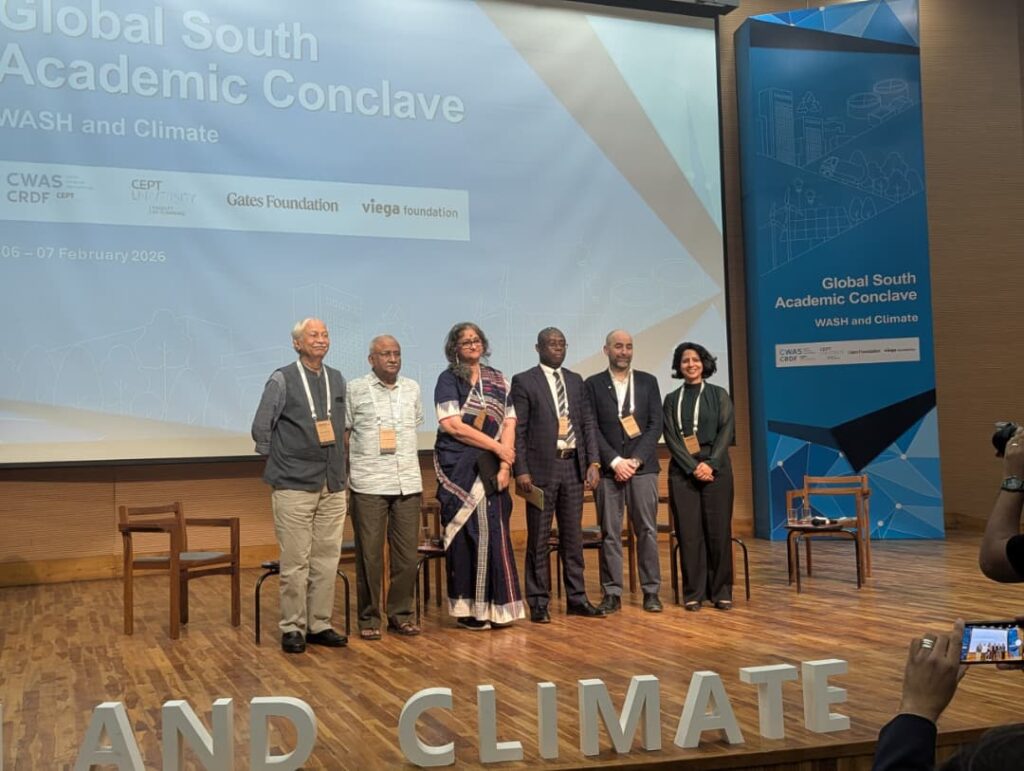
During the conclave, NWSC Senior Manager Performance Management and Staff Development Martin Kalibbala shared insights on data driven innovations for WASH and climate change during a panel session. Ms Penninah Nabireeba, Branch Manager Industrial Area Branch Kampala Water, presented NWSC success stories during a session on best practices in urban water utility operations.
NWSC’s research and innovation agenda is further strengthened through partnerships with Gates Foundation, CRDF, Viega Foundation and other international institutions, creating fertile ground for accelerated and inclusive service delivery.
Dr. Mugisha’s emphasis on customer-centricity is critical. Utility reform is essentially a massive digital transformation project. Success hinges on treating citizens as high-value users, requiring seamless tech integration and accessible platforms, much like the convenience found via a bigbuny app download.
Really appreciate this nuanced take; focusing on balance over just the action is key! It makes understanding responsible play so much clearer than usual hype. Check out bet365 login online casino for more thoughts like this.
Best spot for sports and slots combined. I love that I don’t have to switch accounts to bet on my favorite team. idbolaslot88 is definitely a top-tier choice.