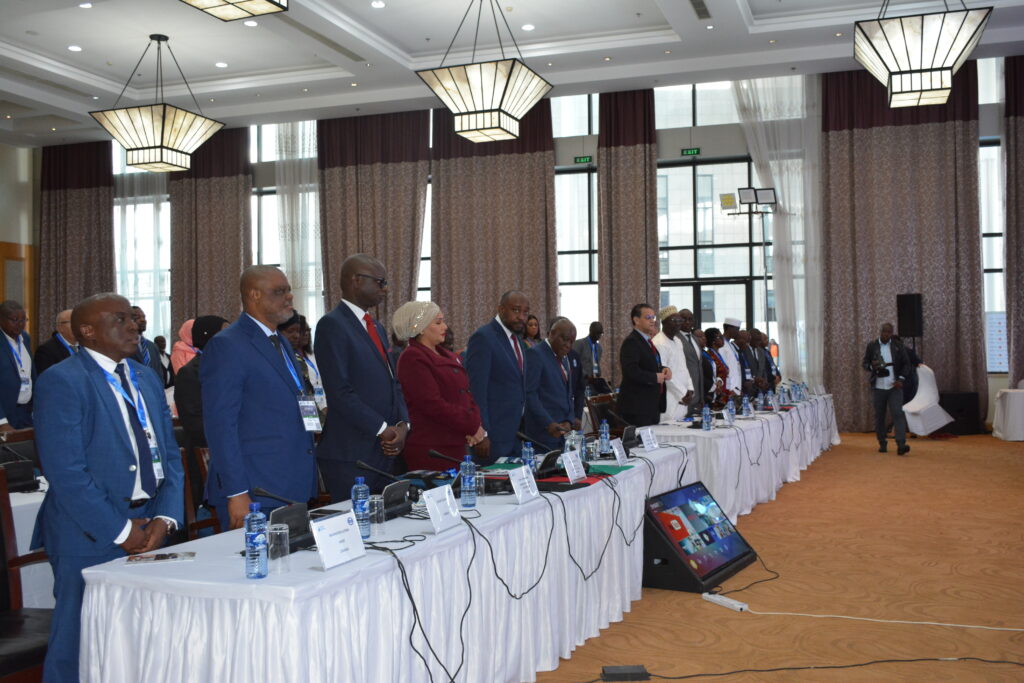
The recently concluded meetings of the African Water and Sanitation Association’s (AfWASA) Strategic and Technological Council (STC) Conference & Exhibitions 2025 in Malawi certainly set the bar high. From the overwhelmingly impressive attendance by representatives from 22 African countries to Malawi’s Minister of Water and Sanitation, Hon. Abida Sidik Mia, calling for urgent, coordinated action, and challenging the sector to rethink financing models and expand the role of women in shaping water infrastructure that actually responds to community needs. But the true standout was the unveiling of new STC structural reforms aimed at improving coordination, innovation, and service delivery across the continent.
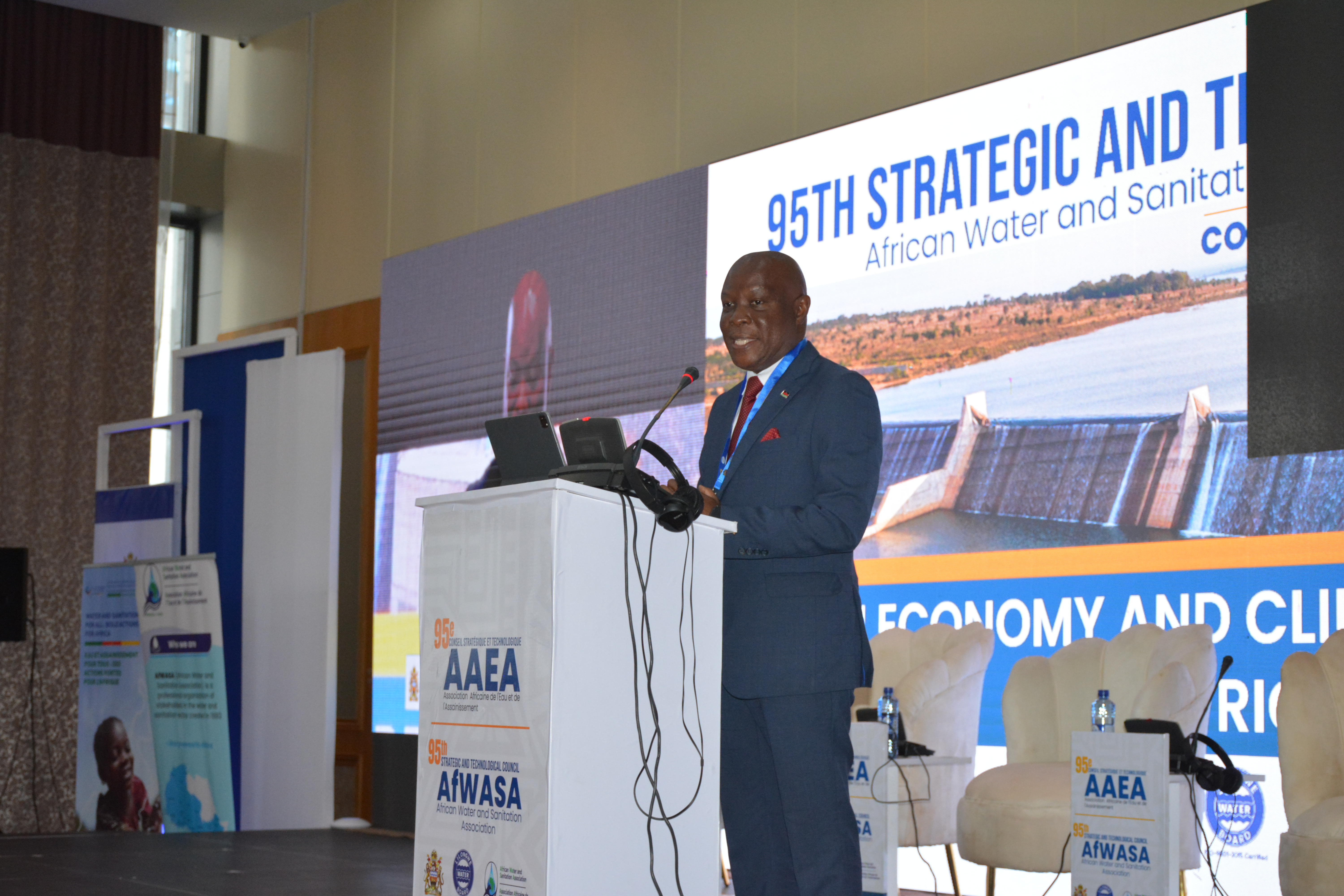
These reforms were reinforced by Eng. Mahmood Lutaaya, Chairperson of the STC, who announced the council’s rebranding from the Scientific and Technical Council to the Strategic and Technological Council. According to him, this was a deliberate shift toward integrated leadership, policy influence, and innovation.
“Our continent is fertile with ideas,” he said. “We must now harvest results.” Simply put, Eng. Lutaaya cautioned that we can no longer afford to remain passive participants. Instead, we must design and deliver.
Among the most notable changes was the unveiling of a leaner, results-oriented council structure, with membership reduced to 25 with the goal of achieving quicker, more focused decision-making without compromising technical depth or regional representation. The reforms also introduced eight Specialist Groups, each focusing on a key thematic area such as climate resilience, sanitation, investment, innovation, rural access, and utility performance. These groups are expected to function as delivery arms, with designated leadership, clear action plans, and leadership renewal every two years.
Still, as promising as it all sounds, will it work?
Dr. Rose Kaggwa, Senior Vice President of the International Water Association and Chairperson of the Global Water Operators’ Partnerships Alliance, made a strong case for why reforms like these are not just timely, but necessary. Throughout the conference, she underscored the importance of capacity building and regional collaboration, highlighting programmes such as Water Operators’ Partnerships and the Global Sanitation Graduate School, hosted by Uganda’s National Water and Sewerage Corporation (NWSC), as examples of how shared knowledge can be turned into practical, scalable solutions. Her message was unambiguous: structure alone isn’t enough. It must be backed by technical expertise, commitment, and follow-through.
From the perspective of a younger professional, Ms. Evelyn Mukajusi, President of the Young Water Professionals–Uganda Chapter, Branch Manager at NWSC’s Urban Pro-Poor Branch, and newly appointed External Relations Coordinator for the Specialist Group on Rural and Peri-Urban Water Supply, described the conference as enlightening. For her, it laid bare just how much more the continent still needs to embrace and deliver to meet its targets. She pointed to the urgency of strengthening digital literacy and committing to continuous learning, along with the power of regional partnerships in tackling shared challenges. Most critically, she highlighted the need for benchmarking, learning from one another to drive performance and reduce inefficiencies across utilities.
Looking back on it all, one begins to see the pieces aligning, at least on paper. The narrowed-down structure, the task-specific groups, the energy in the sessions, and the growing emphasis on youth, gender inclusion, and institutional collaboration all suggest a sector trying to shift from talk to traction.
But is this truly a turning point? No one can say for sure. Perhaps it will come down to how quickly the Specialist Groups take form, how meaningfully they engage with governments and communities, and how grounded their interventions are in everyday realities. For a continent facing mounting climate stress, rapid urbanisation, and persistent service gaps, the case for more coherent, agile coordination could not be more urgent.
So, whether the STC shake-up signals a real turning point for Africa’s water sector remains to be seen. The structure is there. The intent has been stated. Now, the answer lies in what gets done, and how soon
https://shorturl.fm/GjqgR
https://shorturl.fm/6JDGb
https://shorturl.fm/1m6lP
https://shorturl.fm/bb3Oc
https://shorturl.fm/chDPd
https://shorturl.fm/7GQU3
https://shorturl.fm/RDor6
https://shorturl.fm/w1DmI
https://shorturl.fm/VdVSB
https://shorturl.fm/6Rs0J
https://shorturl.fm/Ii3mt
Hey guys, just stumbled upon fil777org. Looks kinda interesting. Is it legit? Curious what the community thinks before I jump in!
Jili77login, eh? Quick and easy to log in, which is a major plus. Games load fast, and I haven’t had any issues yet. Could be a winner! You gotta give it a shot. jili77login
Spotted Setrabetcasino the other day. Really nicely designed website. I found a few games and they have a good selection. Give them a peek: setrabetcasino