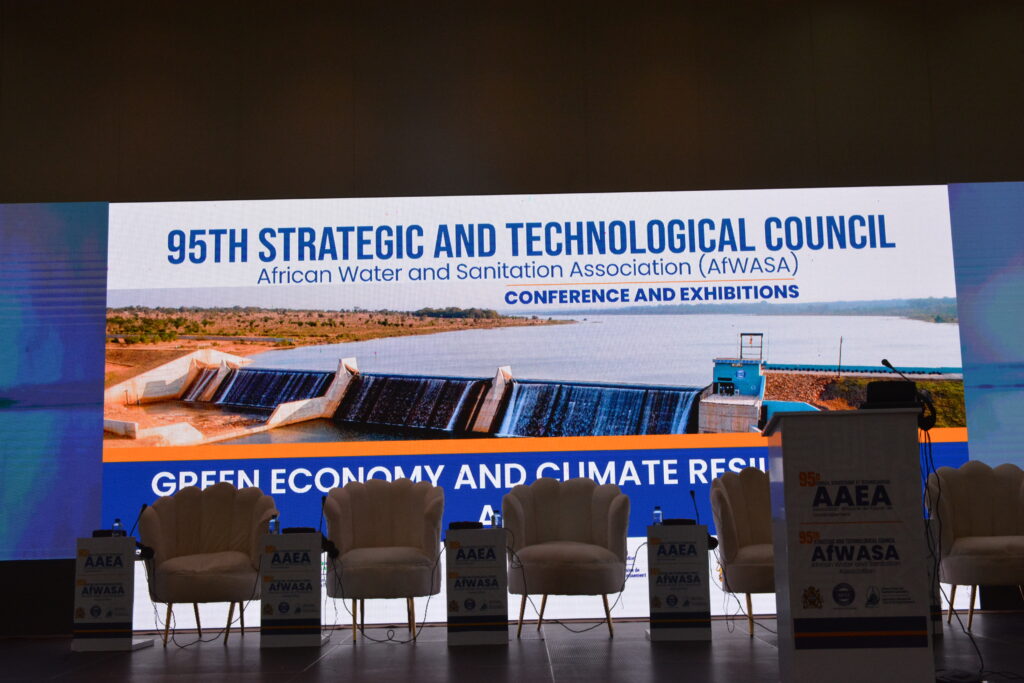
Representatives from 22 African countries have gathered in Malawi’s capital for the opening of the 95th Strategic and Technological Council (STC) Conference and Exhibition under the African Water and Sanitation Association (AfWASA).
Hosted by the Government of Malawi and the Lilongwe Water Board, the four-day congress is running under the theme “Green Economy and Climate Resilience in Africa.” With climate pressures mounting and service gaps widening, the forum has placed a spotlight on practical solutions that can shape a more water-secure future, led, designed, and funded by Africans.
Hon. Abida Sidik Mia, Malawi’s Minister of Water and Sanitation, officially opened the conference with a call for urgent and coordinated action.
“Africa’s water challenges transcend borders,” she said. “Let this be a launchpad for African-led action.”
She urged delegates to rethink financing approaches, recommending green bonds, public-private partnerships, and climate adaptation funds as tools for closing investment gaps. She also hinted on the importance of women’s leadership in shaping water infrastructure that responds to real community needs.
Taking the podium next, Eng. Mahmood Lutaaya, Chairperson of the STC, announced a calculated rebranding of the council’s identity and focus. Formerly the Scientific and Technical Council, it will now be known as the Strategic and Technological Council, a shift he described as necessary to reflect the evolving demands of the water sector, where integrated leadership, policy influence, and innovation must work hand in hand.
“Our continent is fertile with ideas,” Eng. Lutaaya said. “We must now harvest results.”
He challenged delegates to move beyond passive roles and step into the design and delivery of the continent’s water future.
“This conference must become a laboratory of breakthrough ideas, not for debate but for real implementation.”
Mr. Silli Mbewe, Managing Director of the Lilongwe Water Board and Vice President of AfWASA, welcomed participants by highlighting Malawi’s commitment to regional water cooperation and knowledge exchange. He called for increased engagement from Southern Africa and encouraged more technical professionals to join AfWASA platforms. His remarks also emphasised the role of youth, gender equity, and innovation in driving institutional transformation.
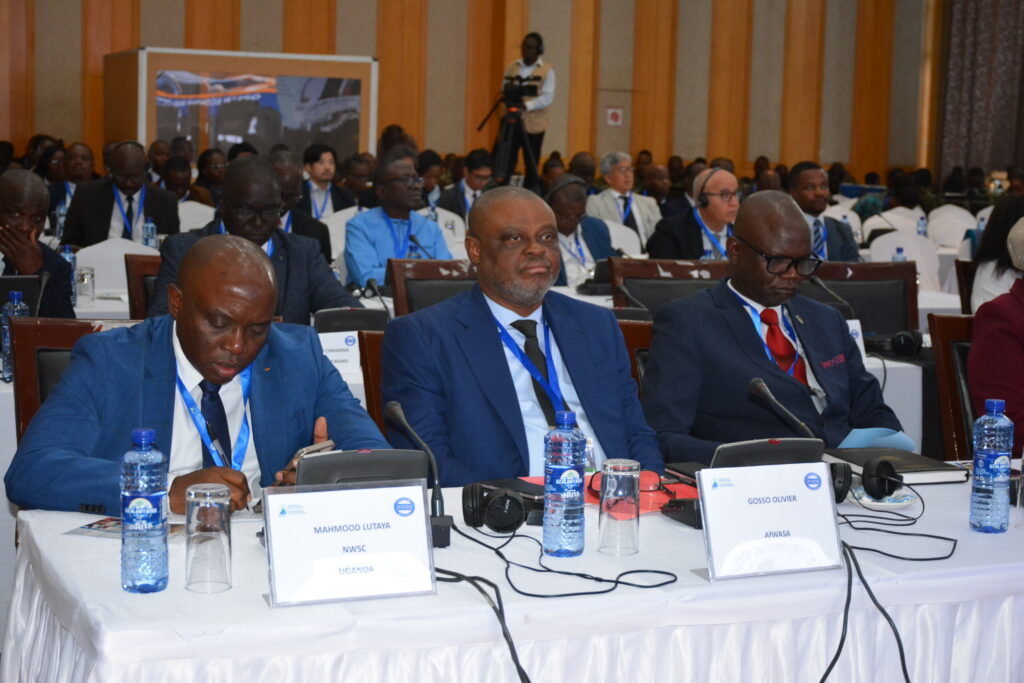
Eng. François Olivier Gosso, Executive Director of AfWASA, offered a sobering reminder of the need to ground ambition in local reality.
“Transformation will not come from outside,” he said. “Africa must design, fund, and implement its water future.”
Meanwhile, Mr. Elias Chimulambe, Principal Secretary at Malawi’s Ministry of Water and Sanitation, endorsed Malawi’s readiness to domesticate resolutions from the conference, and pointed to the country’s own development framework and regional climate resilience strategy as entry points for aligning political will with action.
Day one delivered a strong opening, with clear calls to shift from promises to policies, and from policies to progress. From financing and governance to youth entrepreneurship and solar-powered rural schemes, the sessions voiced Africa’s commitment to accelerate service delivery while staying rooted in its own strengths.
As discussions unfold over the coming days, expectations are high that this congress will deliver more than declarations with actionable commitments, reinforced partnerships, an agenda that speaks to the urgency of the moment, and the capabilities of the continent.
https://shorturl.fm/McpTW
https://shorturl.fm/9Htci
https://shorturl.fm/Asj1m
https://shorturl.fm/GxJtH
https://shorturl.fm/FU8CO
https://shorturl.fm/sOwN4
https://shorturl.fm/t5AZn
https://shorturl.fm/hqi6G
https://shorturl.fm/VELGF
https://shorturl.fm/dH9iY
https://shorturl.fm/ohM3W
https://shorturl.fm/WtOGJ
https://shorturl.fm/0V3T6
https://shorturl.fm/0V3T6
https://shorturl.fm/rB0xk
https://shorturl.fm/okt4I
https://shorturl.fm/JmqMB
https://shorturl.fm/7lCTj
https://shorturl.fm/HP0ig
https://shorturl.fm/H4Iwm
https://shorturl.fm/h5pYW
https://shorturl.fm/RLJJY
https://shorturl.fm/fvfEz
https://shorturl.fm/mDuZZ
https://shorturl.fm/JxWZT
https://shorturl.fm/ueAxo
https://shorturl.fm/HH3Fz
https://shorturl.fm/qVhGK
https://shorturl.fm/sGKGY
https://shorturl.fm/rSR5p
https://shorturl.fm/W05Bz
https://shorturl.fm/NhBYi
https://shorturl.fm/xd4Rl
https://shorturl.fm/igMeR
https://shorturl.fm/sQ40M
https://shorturl.fm/xMRLv
https://shorturl.fm/p5aN6
https://shorturl.fm/iUlQ9
https://shorturl.fm/0fsKA
https://shorturl.fm/ZCKEn
https://shorturl.fm/q2NnT
https://shorturl.fm/izXXX
https://shorturl.fm/orV9Y
https://shorturl.fm/1svyX
https://shorturl.fm/RLDKT
https://shorturl.fm/6cSx5
https://shorturl.fm/LX8wY
https://shorturl.fm/YKpEH
https://shorturl.fm/qJkBc
https://shorturl.fm/n7iyP
https://shorturl.fm/5uzt5
https://shorturl.fm/m1z5y
https://shorturl.fm/OB8Cq
https://shorturl.fm/z42rE
https://shorturl.fm/No1ca
https://shorturl.fm/gUUeo
https://shorturl.fm/EZXhM
https://shorturl.fm/7X2Lj
https://shorturl.fm/GNM6y
https://shorturl.fm/Zga4I
https://shorturl.fm/EftbN
Vaobong88vn… Looks like an option when you want to test your betting skills in the arena of sports! Check out their site for some unique betting options. Check out vaobong88vn and try their offers
Yo guys, what’s the deal with mm88com? I’m looking for a new spot to try my luck. Any insights on the odds and payouts? Let’s hear it!
Heard some buzz about sv388thomosv388.com. Seems like they’re trying to make a name for themselves. I’d say check it out and see what’s up. Check it out here: sv388thomosv388
Honestly one of the best interfaces I have used recently. Everything is easy to find and the loading speed is great. Highly suggest vnvm66 for a seamless experience.